
INVITED SPEAKERS

Paulo Batista, University of Évora, Portugal
Current director of the Arquivo Nacional Torre do Tombo, he was senior technician positions at the Instituto de Arquivos Nacionais/Torre do Tombo, Instituto Português do Património Cultural and the Instituto Português do Património Arquitetónico. He has also worked as researcher at the Instituto de Investigação Científica Tropical – Centro de Estudos de História e Cartografia Antiga, and as professor at the MS program in Information Science and Documentation at Universidade NOVA de Lisboa (UNL).
Paulo Batista is PhD Researcher at CIDEHUS.UÉ-Interdisciplinary Center for History, Cultures and Societies of the University of Évora, Portugal, where is the coordinator of the research group 2: Heritage and Literacies, and professor at the Autonomous University of Lisbon, where is coordinator and professor of the Postgraduate in Promotion and Cultural and Educational Dynamization of Archives and Libraries, and the Postgraduate in Architectural Archives.
Paulo Batista holds a Ph.D. in Documentation (University of Alcalá, Madrid-UAH), an MS in Information Science and Documentation - Archival Studies (UNL), and an MA in Documentation (UAH). As part of his doctorate, he also received a Diploma of Advanced Studies in Bibliography and Documentation Retrospective in Humanities (UAH), and he also holds a postgraduate degree in Information Society Law (University of Lisbon) and Information and Documentation Science - Librarianship and Archival Studies (UNL), and a specialization in Good Practices in Patrimonial Management (UNL) and Information Science and Documentation - Archival Studies (UNL). He holds an undergraduate degree in History (University of Lisbon).
Paulo Batista is the author of several books and about 90 papers published in international journals and conference proceedings. He was also keynote speaker and invited speaker at various international conferences (Portugal, Argentina, Belgium, Brazil, China, Ecuador, Egypt, England, Fiji, France, India, South Africa, Thailand, Türkiye and South Korea). More informations: https://www.cienciavitae.pt//0618-CE7B-7145
Speech Title: Impact of Information on the Enterprise and the Individual
Abstract: presented a new interpretation of Theodore Schellenberg's Three Age Theory. They called attention to the fact that the three phases of archival documents are not separate but, on the contrary, integrated. They argued that these three stages can even be looked at in a segmented way, provided the union between them is ensured. Their great innovation relative to Schellenberg's work lay, precisely, in critiquing the division and separation between the three ages of archival documents. Couture and Rousseau thereby brought together all the phases of the lifecycle of records, from production to dissemination, in opposition to the sterile distinction advocated by traditional archivists and document managers. In my opinion, however, the best approach to integrating information management is known as records continuum, which place archives in a post-custodial, informational, and scientific paradigm. This Australian concept arose in the 1990s amid the huge explosion of information, communication technologies and new media. This context forced Information Science to redefine its object of study. Records continuum is closely related to the integrated management model of Couture and Rousseau, while it carries their innovation further, perfecting it and replacing it with systemic dynamics and providing continuity between archives. In fact, records continuum means, literally, continuous management. It looks at the whole process from the production of records to their final archiving. Otherwise, we cannot speak of continuous management. That is why, when we speak of rigid archives – current, intermediate, and definitive, this approach is more theoretical than practical. There is, in fact, no separation between these phases, even less so from the point of view of the value of documents. The traditional distinction between information with probative and historical value ceases to exist. The information is simultaneous and is, in fact, the same.
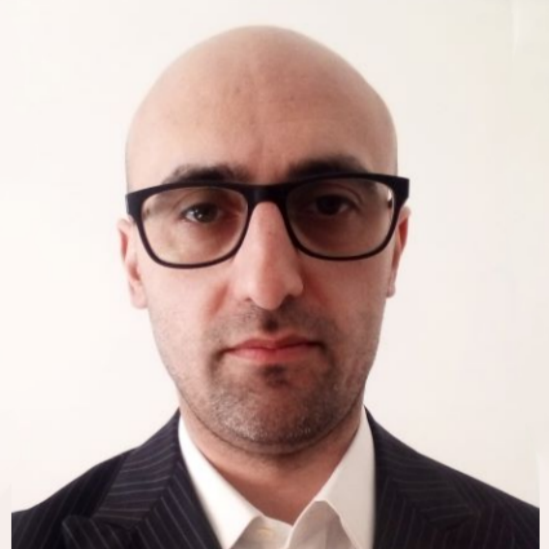
Luca Pallotta, University of Basilicata, Italy
Luca Pallotta (Senior Member IEEE) received the Laurea Specialistica degree (cum laude) in telecommunication engineering in 2009 from the University of Sannio, Benevento, Italy, and the Ph.D. degree in electronic and telecommunication engineering in 2014 from the University of Naples Federico II, Naples, Italy. He was an Assistant Professor at University of Roma Tre from 2019 to 2022. He is currently an Associate Professor at University of Basilicata.
More than 15 years of experience in research in Signal Processing and Remote Sensing, with strong expertise in the field of covariance matrix estimation for radar applications, radar targets detection, automatic target recognition (ATR), micro-Doppler signature analysis and exploitation, multi-polarimetric SAR image classification, statistical signal processing with emphasis on radar/SAR signal processing.
Since November 2020 he is Associate Editor for IEEE Journal of Selected Topics in Applied Earth Observations and Remote Sensing (JSTARS). From July 2018 to February 2021, he was Associate Editor for the journal Springer Signal, Image and Video Processing (SIVP).
He was a finalist of the M. Barry Carlton Award with the paper “A Novel Algorithm for Radar Classification based on Doppler Characteristics Exploiting Orthogonal Pseudo-Zernike Polynomials by C. Clemente, L. Pallotta, A. De Maio, J. J. Soraghan and A. Farina”, published on IEEE Trans. on Aerospace and Electronic Systems in 2015. He won the Student Paper Competition at the IEEE Radar Conference 2013.
Reviewer for several scientific international journals and conferences. Extensive publication output with more than 50 Journal papers (IEEE, IET), and more than 40 conference proceedings in highly rated conferences (IEEE Radar Conference, IRS, Nato Specialists Meeting, ...), and 7 book chapters.
Zoran Bojkovic, University of belgrade, Serbia
Zoran Bojkovic is full professor of Electrical Engineering University of Belgrade, Serbia, Life Senior Member of IEEE, full member of Engineering Academy of Serbia, member of Scientific Society of Serbia, member of Athens Institute for Education and Research ATINER. He was and still is visiting professor worldwide. He is author/co-author of more than 500 publications: monographies, books (Prentice-Hall, Wiley, McGraw Hill, Springer, CRC Press Taylor&Francis Group, IGI GLOBAL, WSEAS Press), book chapters, peer-reviewed journal, conference and symposium papers. Some of the books have been translated in China, India, Canada, Singapore. His research focuses on computer networks, multimedia communications, green communications, 5G and beyond. He is a highly regarded expert in the IEEE, contributing to the growth of communication industry and society reviewing process in many journals as well as organizing special sessions and being General Chair and TPC member at numerous conferences all over the world. The other activities include serving as Editor-in-Chief and Associate Editor in international journals WSEAS, NAUN and IARAS.
Title: EMERGING TECHNOLOGIES IN 6G WIRELESS NETWORKS: Opportunities and challenges of NTN-IoT satellite connectivity and AI-native network
Abstract: The International Telecommunication Union (ITU) predicts that next Sixth Generation (6G) mobile communication will revolutionize wireless networks with new levels of satellite connectivity and intelligence. Recent academia and industrial research in 3rd Generation Partnership Project (3GPP) is currently transitioning from 5G-Advanced, with 6G studies launching in late 2025. The process is aligned with ITU-R’s IMT-2030 timeline, focusing on integrated non-terrestrial networks (NTN), and AI-native networks. The first commercial 6G networks are expected around 2030, following the completion of 3GPP standards. In the presentation we outline 6G NTN studies targeting 2026-2027 to integrate satellite, aerial, and terrestrial networks into a unified system. Our key focus is Internet of Things (IoT) satellite connectivity and native AI/ML integration, as well as holistic TN-NTN convergence for seamless coverage. The main findings of this presentation include a review of the current research, investigating the challenges, and identifying future research directions.
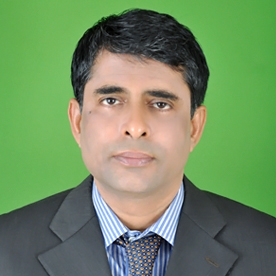
Umesh Chandra Pati, National Institute of Technology, India
Dr. Umesh C. Pati is a Full Professor at the Department of Electronics and Communication Engineering, National Institute of Technology (NIT), Rourkela. He has obtained his B.Tech. Degree in Electrical Engineering from National Institute of Technology (NIT), Rourkela, Odisha. He received both M.Tech. and Ph.D. degrees in Electrical Engineering with specialization in Instrumentation and Image Processing, respectively, from the Indian Institute of Technology (IIT), Kharagpur.
His current areas of interest are Image/Video Processing, Computer Vision, Artificial Intelligence, Medical Imaging, Internet of Things (IoT), Industrial Automation, and Instrumentation Systems. He has authored/edited Three books and published more than 150 articles in peer-reviewed international journals and conference proceedings. He has served as a reviewer in a wide range of reputed international journals and conferences. He has delivered a number of keynote as well as invited talks on various international and national platforms. Dr. Pati has filed 4 Indian patents. Besides other sponsored projects, he is currently associated with a high-value IMPRINT project, “Intelligent Surveillance Data Retriever (ISDR) for Smart City Applications,” which is an initiative of the Ministry of Education and the Ministry of Housing and Urban Affairs, Govt. of India.
He has visited countries like the USA, Italy, Austria, Australia, Singapore, Mauritius, Bangladesh, Nepal, etc., in connection with research collaboration and paper presentations. He was also an academic visitor to the Department of Electrical and Computer Engineering, San Diego State University, USA, and the Institute for Automation, University of Leoben, Austria. He is a Senior member of IEEE, Fellow of The Institution of Engineers (India), Fellow of The Institution of Electronics and Telecommunication Engineers (IETE), and life member of various professional bodies like MIR Labs (USA), The Indian Society for Technical Education, Instrument Society of India, Computer Society of India, and Odisha Bigyan Academy. His biography has been included in the 32nd edition of MARQUIS Who’s Who in the World 2015. He is also a recipient of Torchbearer of Education Award 2020 by Coding Ninjas.
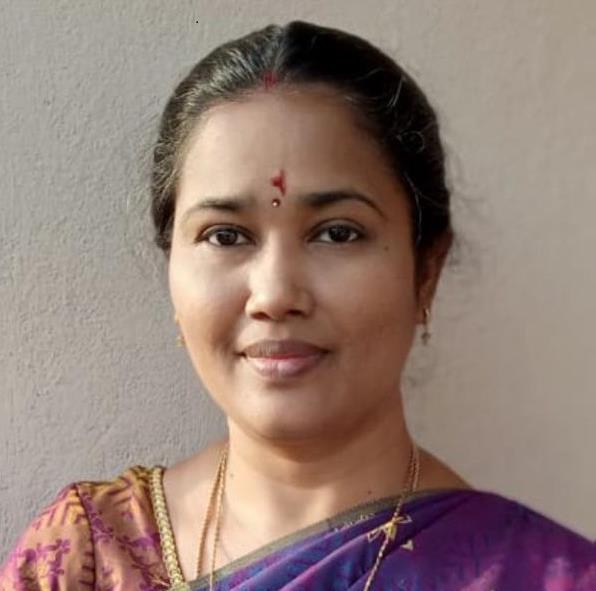
P. Aruna, Coimbatore Institute of Technology, India
Dr. P. Aruna is a dedicated academician with over two decades of teaching experience in Computer Science, who has consistently fostered students’ academic development through effective teaching, mentoring, and active participation in institutional development. She earned her Ph.D. in 2017, specializing in cloud computing with a focus on virtual machine scheduling in cloud datacenters, aiming to optimize resource allocation, enhance resource utilization, and build energy-efficient cloud environments. With a robust research background, she has published numerous papers in reputable Scopus and Web of Science indexed journals, and her research interests span cloud computing, resource management, energy efficiency, and the integration of machine learning techniques in cloud environments. Additionally, as the Faculty Advisor of the FOSS-CIT Club dedicated to promoting open-source technologies among students, she has led the club in organizing seminars, coding competitions, and hackathons to cultivate students’ technical competencies and engagement with open-source communities. Committed to establishing a vibrant research and innovation ecosystem at her institution, she motivates students to engage in research activities, obtain professional certifications, and pursue lifelong learning, with the vision of bridging the academia-industry divide and nurturing technical excellence among students.